Why bVault
A report shows you numbers. A control plane defends them.
Most MSPs run the business of backup on exports, spreadsheets and month-end reconciliation. bVault replaces that with one governed chain from technical evidence to margin — and that is a much harder thing to build than a dashboard.
Raw metrics are never treated as commercial truth.
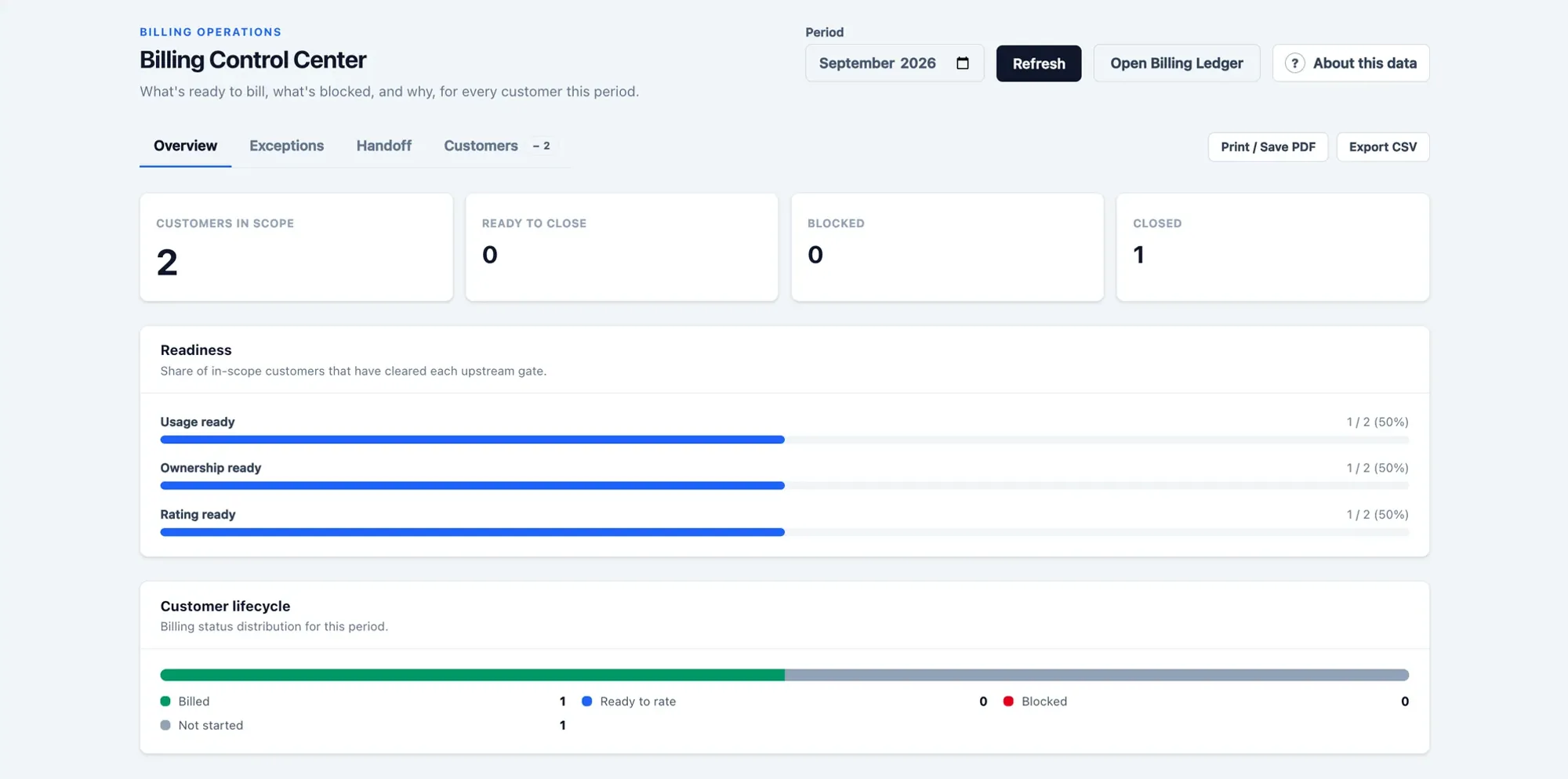
Protected capacity is evidence, not an invoice line. Between the two sit explicit, dated decisions: who owns it, whether it is fit to bill, under which contract, at which price, in which period. bVault makes each decision a governed step instead of a formula in a cell.
Spreadsheeta number nobody can defendbVaulta decision somebody approved
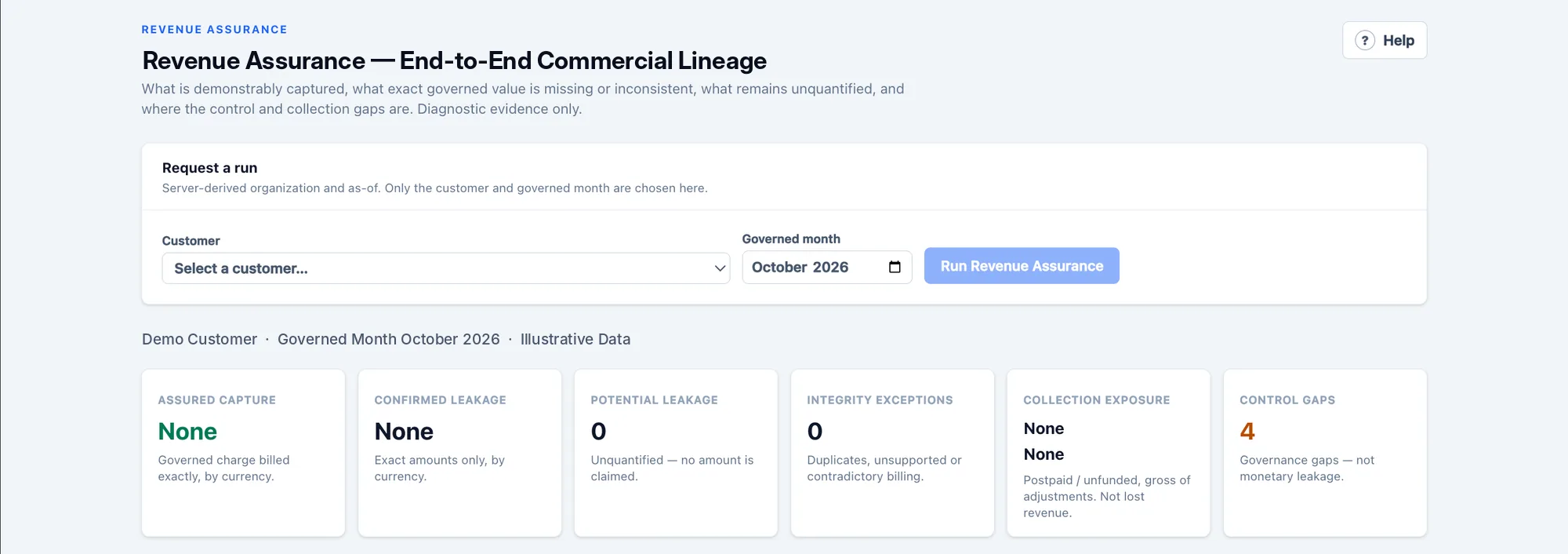
Nothing silently becomes revenue — and nothing silently leaks.
Capacity with no owner, no contract or no price is surfaced as a gap to resolve, not averaged into a total. Revenue Assurance runs across the whole chain so ownership gaps, commercial gaps and billing exceptions are found before the invoice goes out, not after the customer disputes it.
Spreadsheetsurprises at month endbVaultexceptions before billing
Every figure explains itself.
From an invoice line back to the source evidence it came from. From a margin figure back to the costs allocated to it. Tenant-aware access, an evidence trail on critical actions, and source data that stays distinct per Commvault environment — so finance, sales and operations argue about decisions, not about whose export is right.
Spreadsheet“where does this number come from?”bVaultclick through to the source
The whole business lifecycle, not a module.
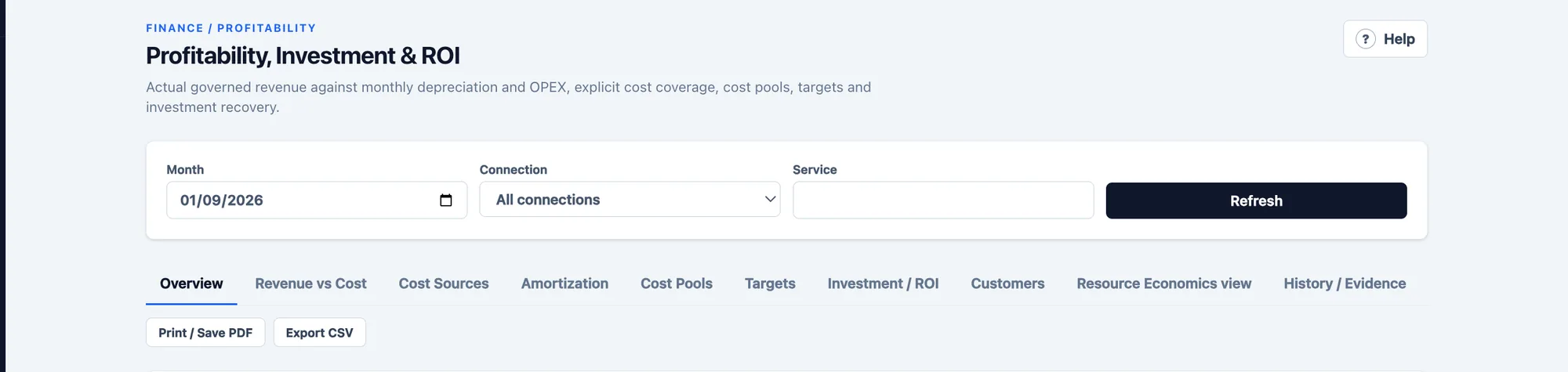
Usage, catalog, contracts, rating, billing, cost allocation, profitability and planning share one data model and one set of governance rules, across multiple Commvault environments. Add a capability and it inherits the chain — it does not start a new silo.
Point toolsfive systems, five truthsbVaultone chain, one truth